Fuel Type Breakdown
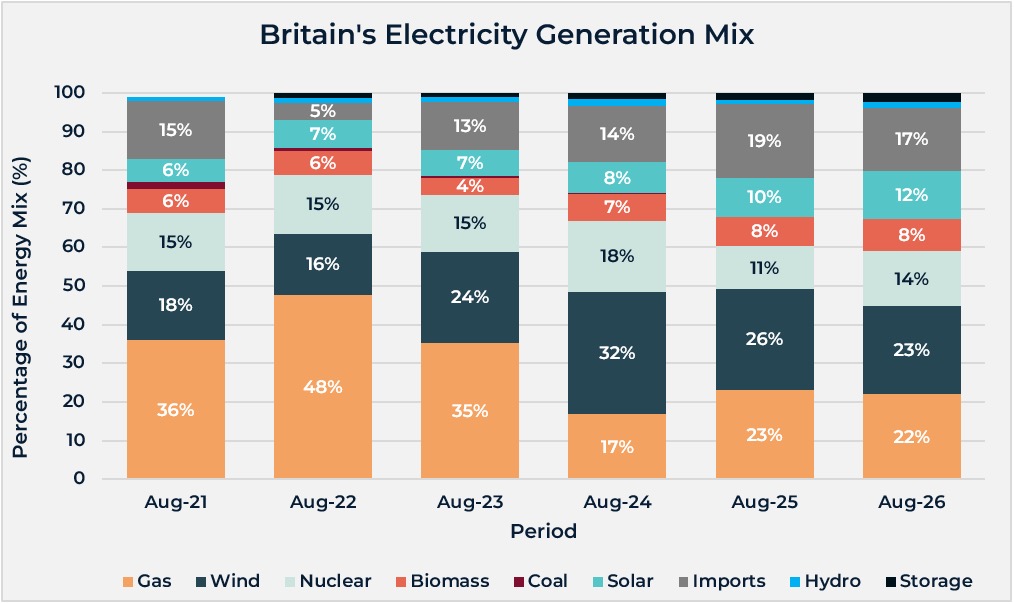
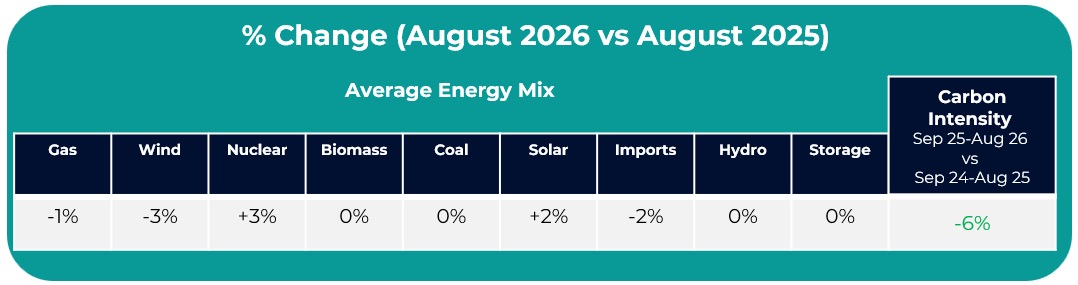
Britain's electricity generation in August 2026 was led by wind, which contributed 23% of the energy mix. While slightly below the 26% recorded in August 2025, wind remained a major source of low-carbon electricity and continued to play a central role in Britain's renewable generation mix.
Gas supplied 22% of electricity in August 2026, down marginally from 23% in August 2025. Although gas remains an important contributor to the overall mix, its share remains significantly below the levels typically seen earlier in the decade.
Electricity imports accounted for 17% of the generation mix, down from 19% in August 2025 but still representing a significant source of supply. This continued reliance highlights the important role interconnectors play in supporting grid flexibility and meeting electricity demand.
Nuclear power contributed 14%, up from 11% in August 2025, providing an important increase in firm low-carbon generation compared to the previous year.
Solar output reached 12%, up from 10% in August 2025 and marking its highest August contribution on record. Strong summer conditions allowed solar to continue making a substantial contribution to Britain's electricity supply.
Biomass generation supplied 8% of electricity, unchanged from August 2025, continuing to provide reliable dispatchable low-carbon power.
Storage technologies contributed 2%, consistent with August 2025 and maintaining their highest August share on record. This reinforces the growing role of battery storage in balancing an increasingly renewable-led electricity system.
Hydropower remained at 1%, broadly in line with recent years and continuing to provide a small but consistent contribution.
Coal once again remained absent from the generation mix, reinforcing Britain's continued transition away from coal-fired electricity generation following its phase-out in 2024.
Zero-Carbon Sources & Carbon Intensity
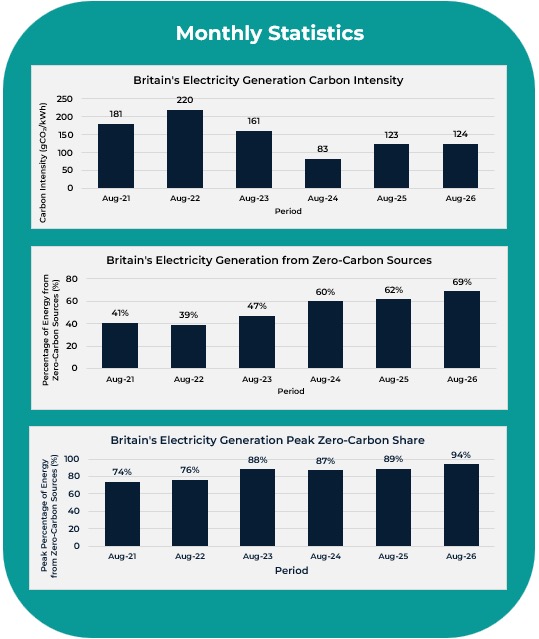
Zero-carbon sources, including wind, solar, nuclear, and hydro, generated 69% of Britain's electricity in August 2026. This represents a significant increase from 62% in August 2025 and marks the highest August share on record.
Carbon intensity was 124 gCO₂/kWh in August 2026, broadly unchanged from the 123 gCO₂/kWh recorded in August 2025. Despite remaining relatively stable year-on-year, carbon intensity continues to sit well below historical levels, reflecting the broader shift towards renewable and low-carbon generation.
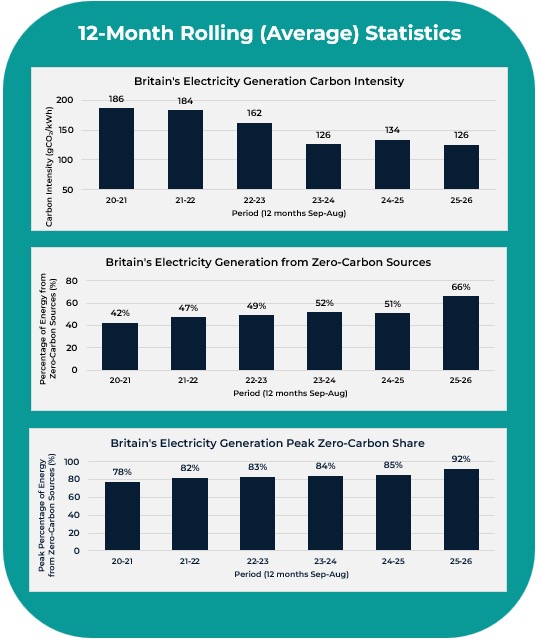
On a rolling 12-month basis, carbon intensity remained at 126 gCO₂/kWh, compared to 134 gCO₂/kWh in the previous period. Meanwhile, the rolling 12-month average for zero-carbon generation increased to a record 66%, highlighting continued progress in decarbonising Britain's electricity system.
Peak zero-carbon generation reached 94% during August 2026, up from 89% in August 2025 and marking the highest August level on record. On a rolling 12-month basis, average peak zero-carbon share remained at a record 92%, demonstrating the electricity system's increasing ability to operate at very high levels of decarbonisation during favourable renewable conditions.
Concluding Remarks
August 2026 represented another strong month for Britain's electricity transition, with zero-carbon generation reaching a record 69% of total electricity supply. Higher contributions from solar and nuclear generation helped offset lower wind output, while gas generation remained below levels typically seen earlier in the decade.
The month also demonstrated the growing capability of the electricity system to operate with very high levels of clean power, with peak zero-carbon generation reaching a record 94%. This reflects continued progress in integrating renewable generation, storage technologies, and other low-carbon sources into the grid.
Looking ahead, maintaining this momentum will require continued investment in renewable energy, storage infrastructure, and new low-carbon capacity. While imports and gas continue to play an important supporting role, the long-term trends remain encouraging, with record rolling averages for both zero-carbon generation and peak decarbonisation highlighting Britain's continued progress towards a cleaner and more resilient electricity system.
Britain's Electricity Summary Charts
To explore more insights, visit our interactive renewables map
here.
Data source: NESO 2026
(https://www.neso.energy/energy-101/great-britains-monthly-energy-stats)