Fuel Type Breakdown
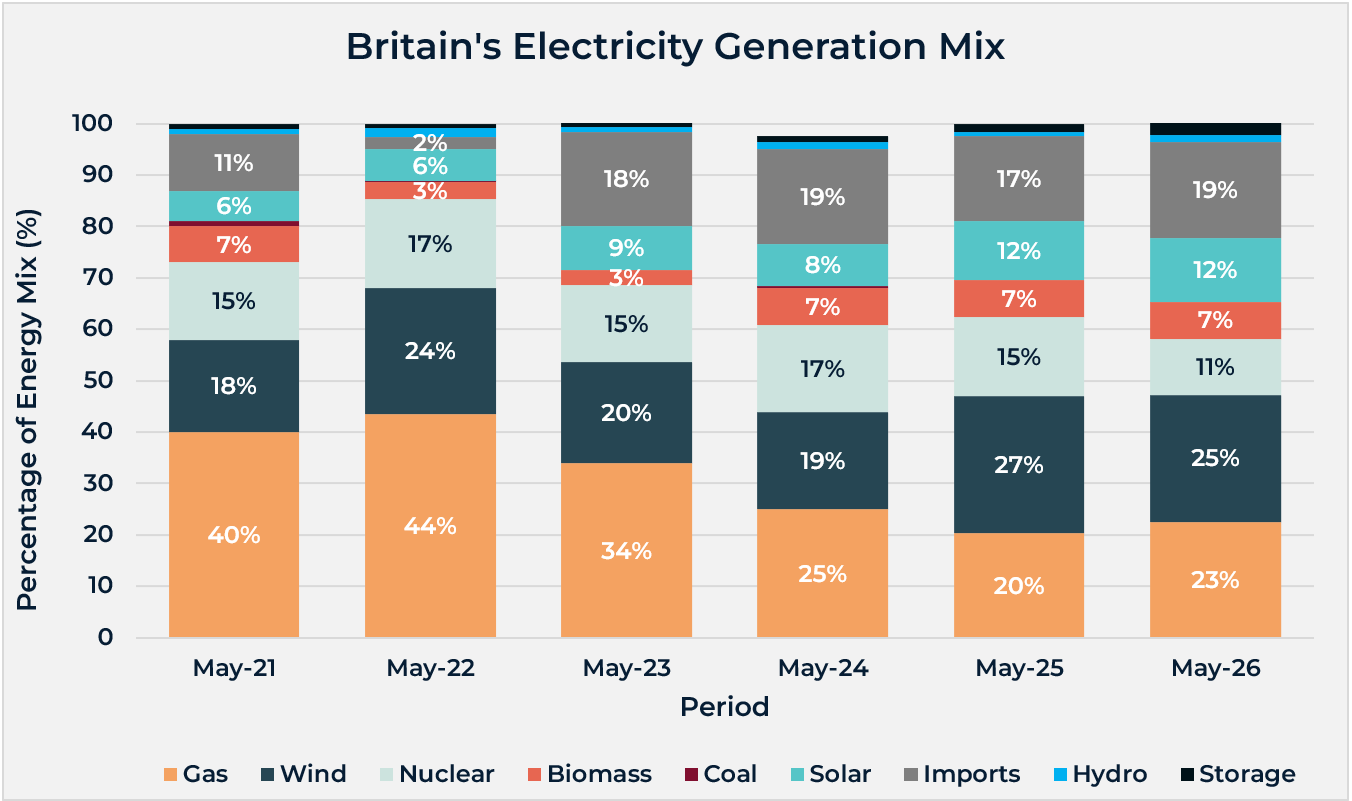
Britain’s electricity generation in May 2026 was led by wind, which contributed 25% of the energy mix. While slightly below the 27% recorded in May 2025, it is still above its contribution in May in prior years.
Gas supplied 23% of electricity in May 2026, up modestly from 20% in May 2025. While this increase reflects some variability in renewable output, gas usage remains significantly below levels seen earlier in the decade and is almost half of its value in May 2022, indicating continued progress in reducing dependence on fossil fuels.
Electricity imports accounted for 19% of the generation mix, up from 17% in May 2025 and representing one of the highest May shares in recent years.
Nuclear power contributed 11%, down from 15% in May 2025 and continuing the trend of lower nuclear output compared to historical levels.
Biomass generation remained stable at 7%, unchanged from May 2025 and continuing to provide a reliable source of low‑carbon, dispatchable power.
Solar output contributed 12%, consistent with May 2025 and reflecting strong seasonal performance as daylight hours increase.
Storage technologies contributed 2%, steady compared to May 2025 and maintaining their highest May share on record. This reinforces the growing importance of battery & storage assets in balancing the grid as renewable penetration increases.
Hydropower remained at 1%, in line with recent years and continuing to provide a small but consistent contribution.
Coal once again remained absent from the generation mix, reinforcing Britain’s continued transition away from coal‑fired electricity generation following its phase‑out in 2024.
Zero-Carbon Sources & Carbon Intensity
Zero‑carbon sources, including wind, solar, nuclear, and hydro, generated 65% of Britain’s electricity in May 2026, representing a notable increase from 57% in May 2025 and continuing the broader upward trend in renewable and low‑carbon generation.
Carbon intensity rose to 122 gCO₂/kWh in May 2026, compared to 106 gCO₂/kWh in May 2025. Despite this year‑on‑year increase, carbon intensity remains significantly below levels seen earlier in the decade and reflects the ongoing transition to a lower‑carbon power system.
On a rolling 12‑month basis, carbon intensity sat at 123 gCO₂/kWh, down from 129 gCO₂/kWh in the previous period. Meanwhile, the rolling 12‑month average for zero‑carbon generation is 64%, marking continued progress in decarbonising Britain’s electricity system.
Peak zero‑carbon generation reached 93% during May 2026, not quite reaching the 99% recorded in April 2026, but respectable nonetheless, and above the 86% recorded in May last year.
Concluding Remarks
May 2026 continued to demonstrate sustained progress in Britain’s energy transition, with zero‑carbon generation remaining high and the system maintaining a majority low‑carbon electricity mix.
While wind output eased slightly compared to May 2025, strong solar performance and steady contributions from other low‑carbon sources helped maintain overall decarbonisation progress. At the same time, a modest increase in gas generation and higher reliance on imports highlight the continued need for flexible and firm power sources to support system stability.
Looking ahead, maintaining momentum will depend on continued investment in renewable capacity, alongside further expansion of storage and flexible low‑carbon solutions. These will be critical to managing variability, reducing reliance on imports, and sustaining long‑term emissions reductions as Britain’s electricity system continues to evolve.
Britain's Electricity Summary Charts
Monthly Statistics
To explore more insights, visit our interactive renewables map
here.
Data source: NESO 2026
(https://www.neso.energy/energy-101/great-britains-monthly-energy-stats)