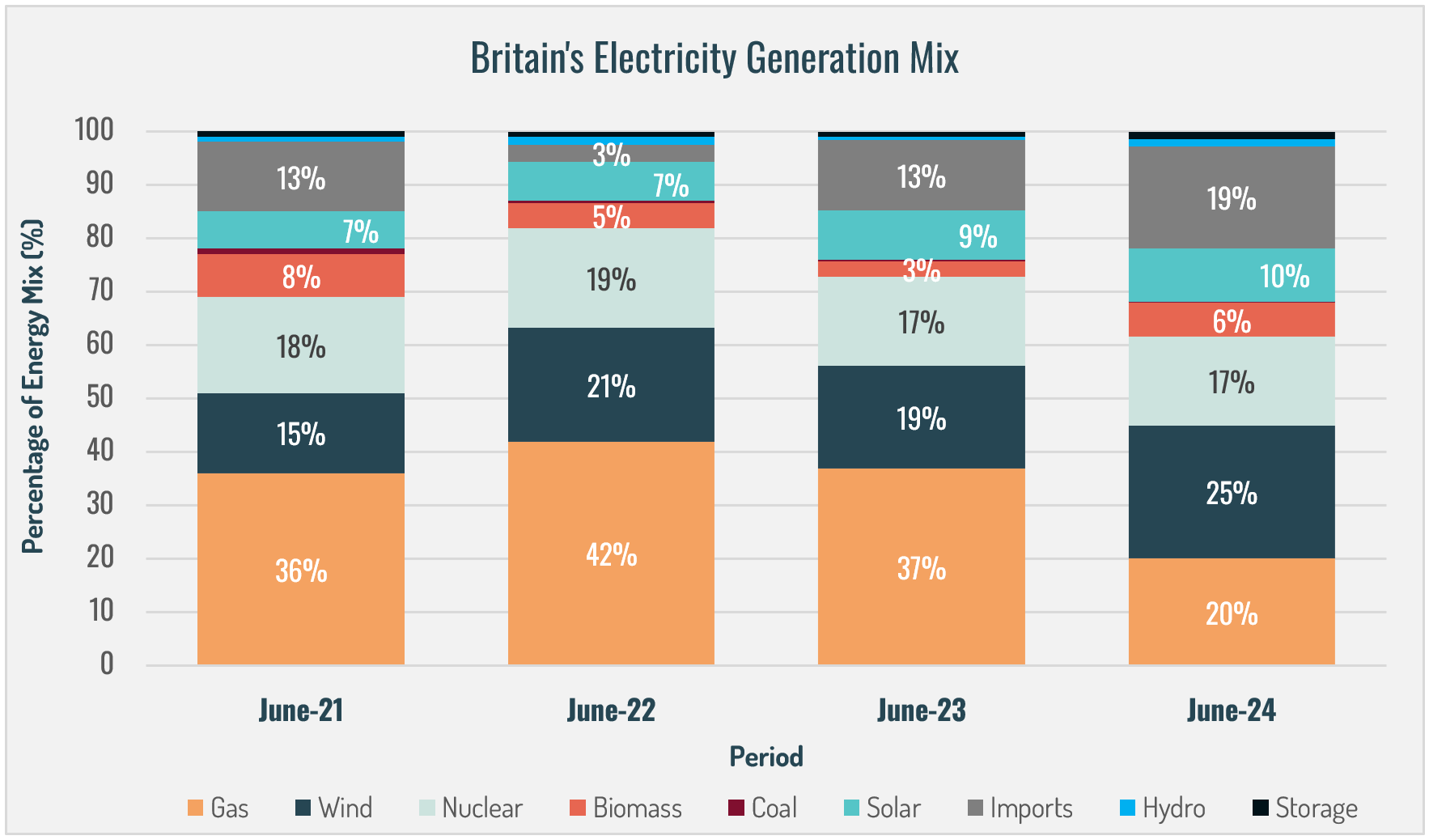
- In June 2024, wind energy was the main source of electricity in Britain, accounting for a quarter of the mix, 6% more than in June 203. Gas contributions fell significantly, accounting for 20% of the mix, approximately half of what gas contributed in June a year earlier (37%) and its lowest contribution for any month so far in 2024. Solar energy increased by 1% in June 2024 compared with June 2023, contributing 10% of the electricity mix, delivering its second highest proportion of Britain’s electricity mix in the previous four years.
- The share of imports and biomass in Britain's electricity mix increased by 6% and 3% respectively compared to June 2023, reaching 19% and 6%. This marks the highest proportion of imports in Britain's electricity mix since at least 2020. Nuclear, hydro, storage and coal contributions remained consistent with June 2023, with nuclear contributing 17%, hydro and storage each accounting for 1% and coal accounting for 1% of the electricity mix, respectively.
- Over half (52%) of the electricity generation in June 2024 came from zero-carbon sources, representing a 5% increase from June 2023 and the highest proportion delivered from zero-carbon sources for June in the previous four years.
- The carbon intensity for June 2024 fell below 100gCO₂/kWh, was the second lowest for any month in the previous four years and 40% lower than for June 2023. The rolling 12-month average from July 2023 to June 2024 remains substantially lower than the previous three 12-month periods, at 135 gCO₂/kWh, 22% lower than the 12-month period prior.
- Increasing the electricity generation from renewable sources can help achieve our Net-Zero ambitions, ensure energy security, and decrease reliance on imports.
Monthly Statistics
To view our interactive renewables map,
click here
Data source: National Grid ESO 2024 (https://www.nationalgrideso.com/electricity-explained/electricity-and-me/great-britains-monthly-electricity-stats)