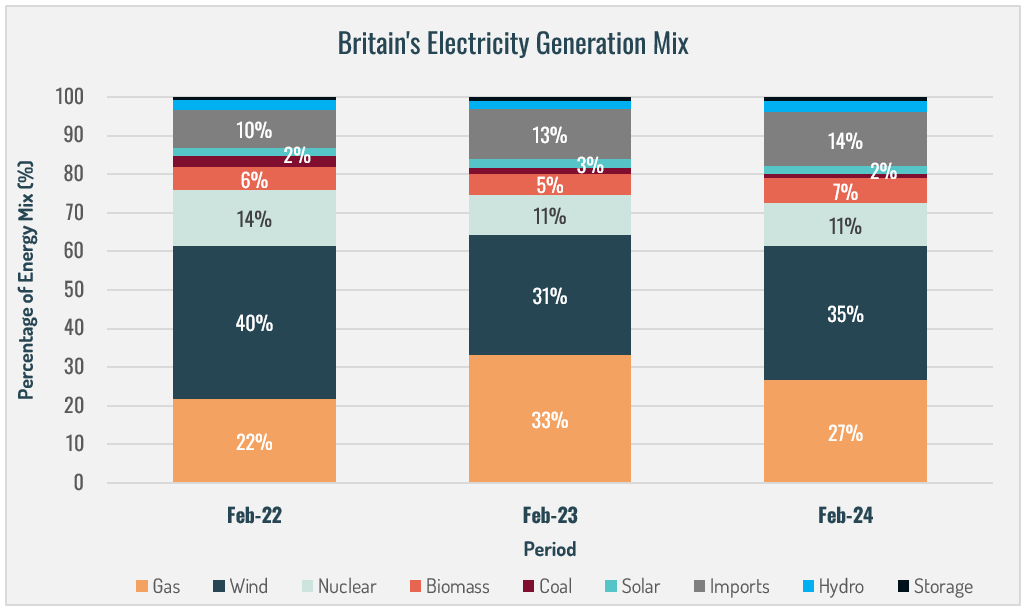
- In February 2024, wind energy was the main contributing source to Britain’s electricity, accounting for 35% of the mix, a 4% increase compared to February 2023, but lower than the contribution in February 2022 (40%).
- Gas accounted for 27% of Britain’s electricity mix in February 2024, a 6% decrease compared with February 2023. Solar contributed 2% of the electricity mix in February 2024, a 1% decrease compared with February 2023.
- Coal and Nuclear contributions remained consistent with February 2023, delivering 1% & 11% of the mix, respectively. Imports and hydro saw a 1% increase in their contributions, comprising 14% and 3% of the mix. Biomass increased by 2% to the 7% of the mix compared with February 2023.
- More than half (51%) of the electricity generation in February 2024 came from zero-carbon sources, representing a 4% increase from February 2023, but lower than February 2022 (60%). The carbon intensity for Britain's electricity generation in February 2024 was 19% lower than for February 2023. The rolling 12-month average for March 2023 to February 2024 remains substantially lower than the previous two 12-month periods, at 151 gCO₂/kWh.
- Increasing the electricity generation delivered by renewable sources can help us achieve our Net-Zero ambitions, ensure energy security, and decrease reliance on imports.
Monthly Statistics
To view our interactive renewables map,
click here
Data source: National Grid ESO 2024 (https://www.nationalgrideso.com/electricity-explained/electricity-and-me/great-britains-monthly-electricity-stats)